

AP Biology: Structure of Water and Hydrogen Bonds
In this AP Biology review, we will be going over learning objectives 1.1.A, the structure of water and how hydrogen bonds can influence water’s properties.
Learning Objective
1.1.A Explain how the properties of water that result from its polarity and hydrogen bonding affect its biological function
Essential Knowledge
1.1A.1 Living systems depend on the properties of water to sustain life
- Water has polarity, because of the formation of polar covalent bonds between hydrogen and oxygen within water molecules. This polarity contributes to hydrogen bonding between and within biological molecules
- Water has a high specific heat capacity, which allows for the maintenance of homeostastic body temperature within living organisms
- Water has a high heat of vaporization, which allows for the evaporative cooling of the surrounding environment. In living organisms, this property allows for body temperature to be maintained
1.1.A.2 The hydrogen bonds between adjacent polar water molecules result in cohesion, adhesion, and surface tension
Polarity of Water
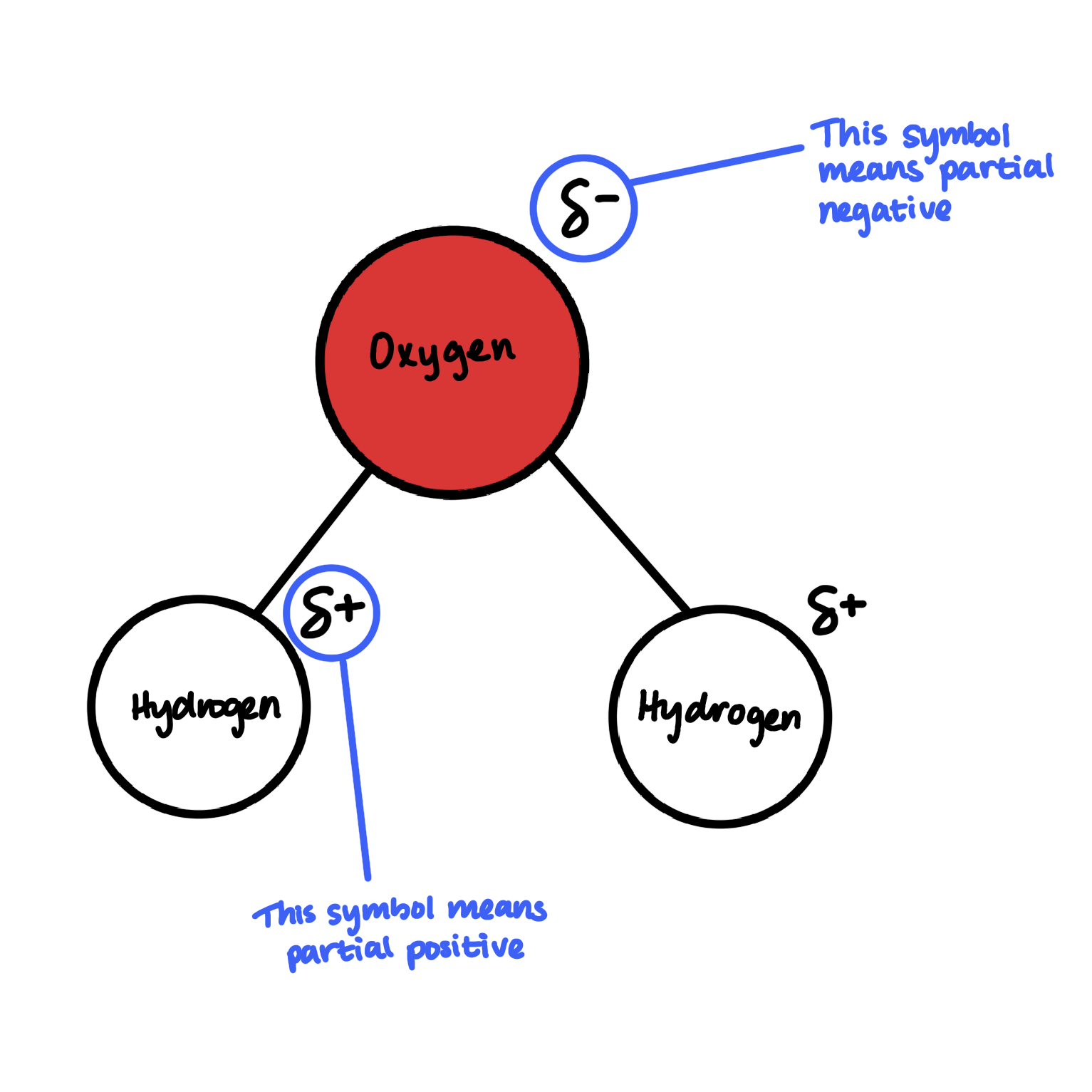
Two hydrogens and one oxygen come together to form covalent bonds. A covalent bond is formed when two elements share electrons with each other. Oxygen is more electronegative than hydrogen, meaning it’s able to more strongly attract electrons towards itself. This results in an uneven sharing of electrons in a water molecule. This uneven sharing causes water to have a partial positive region (hydrogen) and a partial negative region (oxygen).
Ultimately, this uneven sharing of electrons causes water to be a polar molecule.
Hydrogen Bonding
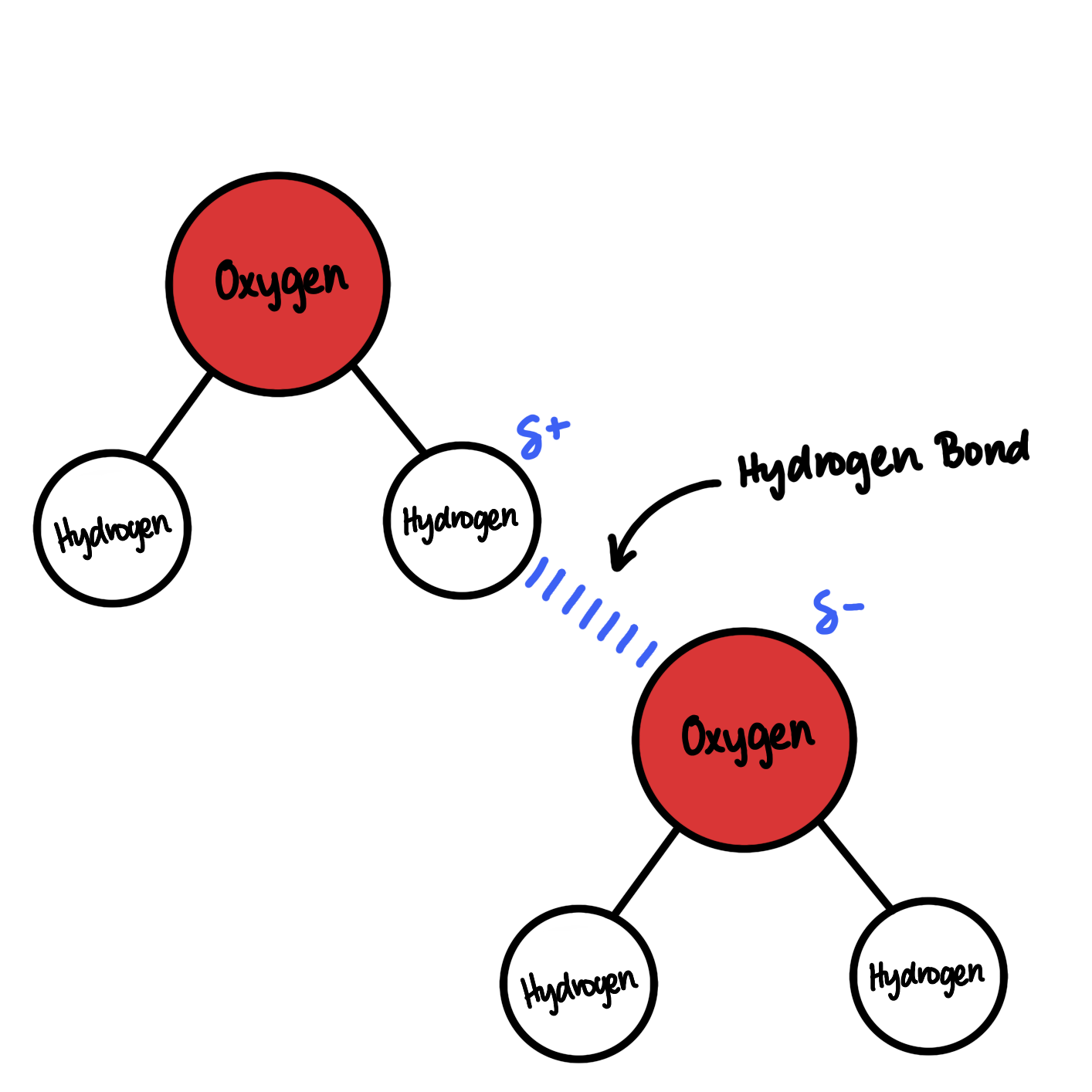
Hydrogen bonds are a type of intermolecular force, which means they are bonds formed between molecules, and not within molecules. Hydrogen bonds form between the positive (hydrogen) and negative (oxygen) regions of water molecules. Hydrogen bonds are the foundation for all of water’s properties, including cohesion, adhesion, high specific heat capacity, evaporative cooling, and solvent properties.
Cohesion
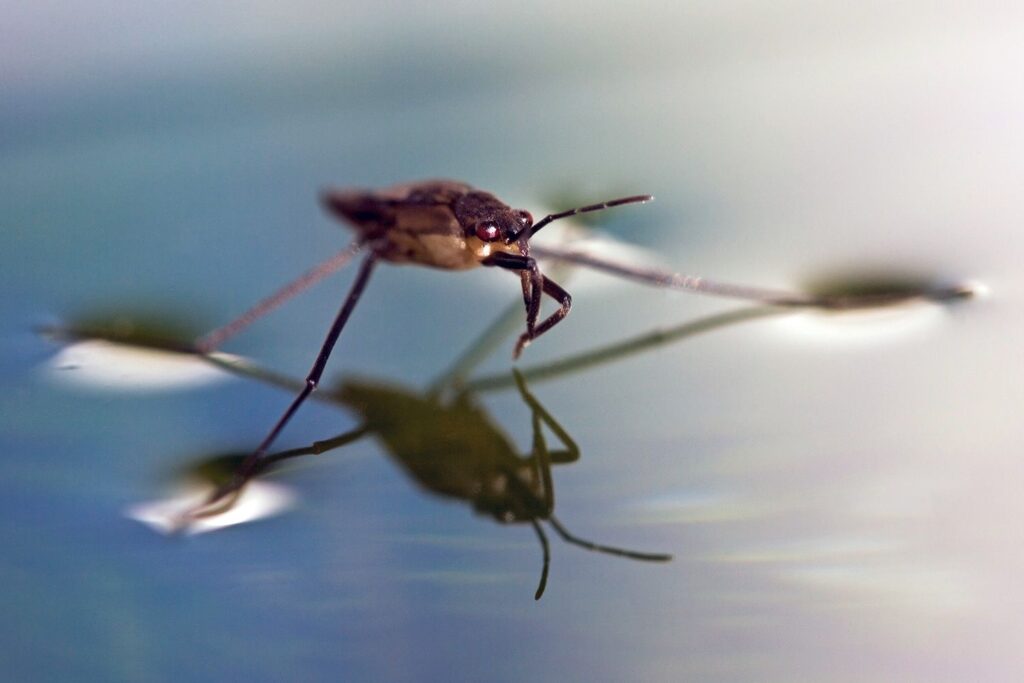
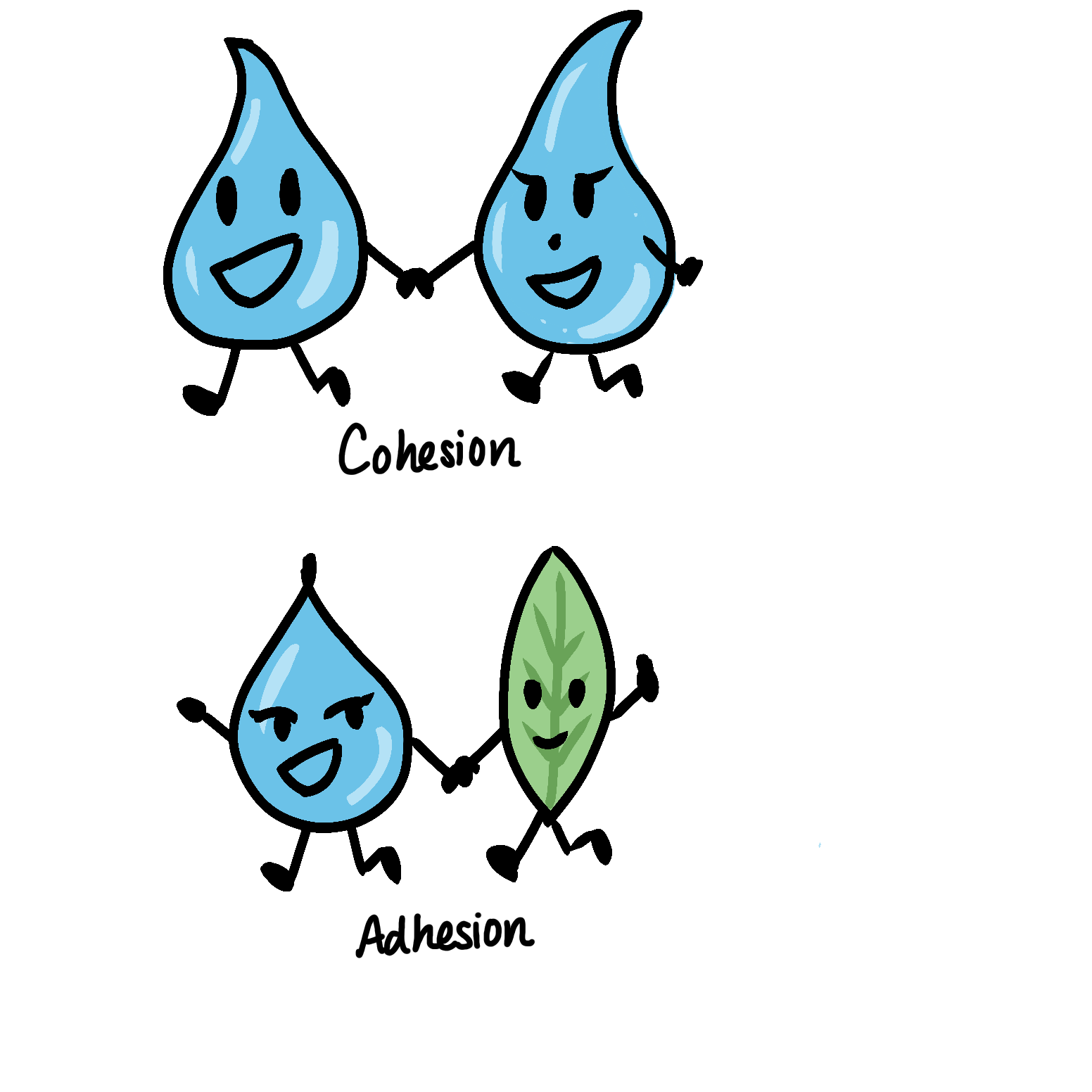
Water molecules are able to stick to other water molecules via hydrogen bonds. This property can cause another property, surface tension. Surface tension is when water’s surface acts like a stretchy, elastic film because the molecules at the top are pulling tightly together. It allows small insects to stand a top of it.
Adhesion
The property where water molecules stick to other types of molecules via hydrogen bonds. Aids in water’s capillary action where water moves upward against gravity.
High Specific Heat Capacity
Water is able to absorb a lot of energy before its temperature is raised by 1º Celsius. It’s essentially hard to get water hot. This capacity allows for maintenance of homeostatic body temperature.
Evaporative Cooling
Evaporative cooling is the process where a liquid cools down as it turns into a gas. This happens because the “hottest” (most energetic) molecules are the ones that evaporate, leaving the “cooler” ones behind. This cools organisms and maintains homeostasis.
Solvent Properties
Water has universal solvent properties in which it can dissolve all polar & charged molecules because water itself is polar. You can use the rule “like dissolves like” to remember this property.